Showing posts with label Professional Design Brief (Week 3). Show all posts

Tuesday, September 10, 2013

[WEEK 3] Collaborative Consumption & Benefits

What Is Collaborative Consumption?


When a community gets together through organized sharing, swapping, bartering, trading, gifting and renting  to get the same pleasures of ownership with reduced personal cost and burden, and lower environmental impact.

Definition Of Collaborative Consumption

The term collaborative consumption is used to describe the cultural and economic force away from "hyper-consumption" to re-invented economic models of sharing, swapping, bartering, trading or renting that have been enabled by advances in social media and perr-to-peer online platform.

The Benefits Of Collaborative Consumption 

The concept of collaborative consumption offers a variety of benefits. It generally reduces costs for the renter or borrower and helps the owner of an item pay for its maintenance. The benefits of collaborative consumption include:
  • Reducing carbon foot print by sharing transportation and assets.
  • Saving costs by borrowing and recycling items
  • Increasing happiness and contentment due to positive social interactions.
  • Opportunities provides to build closer, stronger relationships with their customer base and the community.
  • Collaborative consumption business model generates long-term income from each items, rather than one time earnings that rely upon frequent sales.
  • A group of neighbors share a lawn mower, each person contributes to the cost of maintenance and fuel. This saves money while reducing the amount of storage space people need.
  • Vehicle sharing reduces the congestion of roads and parking lots.
  • Decreases the need for environmentally harmful mining and logging.
  • Reduce the need for individuals to clutter their homes and garage with countless items that they seldom use.  
  • Internet companies share the same computer servers.

[WEEK 3] AIRBNB vs HOTEL

About AIRBNB


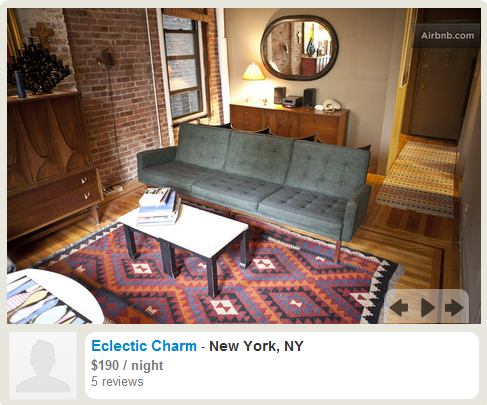
AIRBNB is a website that allow people rent out their home, room or even couch, and let travelers stay at apartment they rent from hosts instead of book hotel rooms. AIRBNB offers thousands of alternatives for spending the night: 390,000 in over 192 countries, to be precise, and at lower prices that you would find at regular hotel.

AIRBNB vs. Hotel


AIRBNB


  • Travelers can stay at some pretty unique places. 
  • AIRBNB apartment rentals cost are 21.2% less than stay in a hotel. People can save 49.5% if people decide to stay in a private room at host's house instead of stay in a hotel.
  • Travelers can stay in locations that never be able to otherwise, and enjoy the luxuries of a home.
  • AIRBNB offer multiple rooms, a kitchen, and more compared to a hotel's bed and bathroom, (and substantially more responsibilities, since they don't have someone changing sheets or cleaning up behind them in an AIRBNB apartment). 
  • Travelers can select many amenities, neighborhood and even the language desired from the host when they search. Some hosts even offer little extras like free breakfast.

Hotel


  • Hotels' rooms are usually standard design and less in home-like atmosphere. 
  • The cost of stay in a hotel can be expensive, but not all cities are equally pricey.
  • Hotels tend to congregate around touristy areas.
  • Hotel offer only one room, with bathroom and some necessities or facilities in a room.
  • Hotel will offer extra services for an agreed fee such as room service for meals or room cleaning service.